Author
Books by Aristotle
Towering ancient Greek philosopher whose treatises laid foundational principles for Western philosophy and science.
1 published MeBook on VisualibleOn Visualible
Available MeBooks by Aristotle
Read the original text unchanged, with optional Visualible context beside the page. The first 20 pages of every MeBook are free.
Biography
About Aristotle
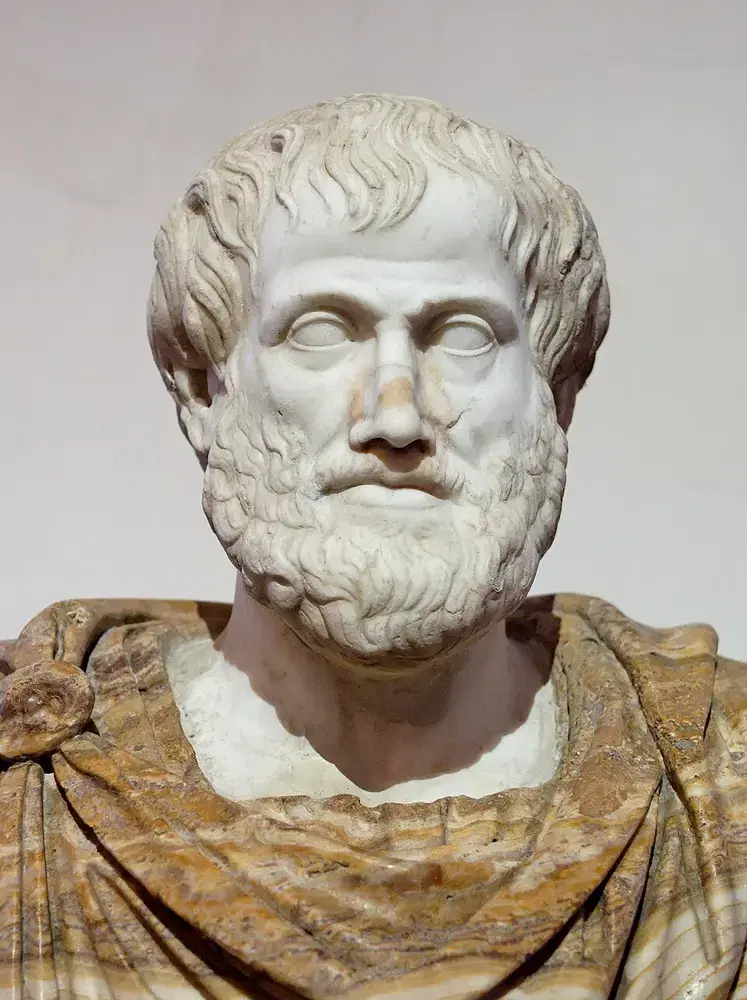
Aristotle (384–322 BC) was an ancient Greek philosopher, polymath, and scientist whose comprehensive inquiries laid the foundational framework for both Western intellectual tradition and modern scientific inquiry. Born in Stagira in northern Greece, Aristotle studied for two decades at Plato’s Academy in Athens before serving as the personal tutor to Alexander the Great. He subsequently founded the Lyceum in Athens, establishing the Peripatetic school of philosophy and compiling an encyclopedic corpus spanning logic, metaphysics, ethics, political theory, biology, rhetoric, and aesthetics. In seminal works such as the Nicomachean Ethics and Politics, Aristotle pioneered teleological analysis and virtue ethics, arguing that human flourishing, or eudaimonia, arises through the rational cultivation of habitual virtue and moderate conduct. His treatises on deductive reasoning, categorical syllogisms, and empirical taxonomy dominated European and Islamic intellectual life for nearly two millennia. Aristotle’s profound synthesis of empirical observation, systematic rigor, and normative wisdom remains central to contemporary philosophical, scientific, and political discourse.
Read Aristotle with the context built in.
Open any MeBook and read the first 20 pages free. No subscription, no detours.
Sign-in required. No purchase.